
Others
Turing is one of the leading China Mold and Accessories manufacturer and supplier, over the years, we have established good relationship with our customers for wholesale Others business
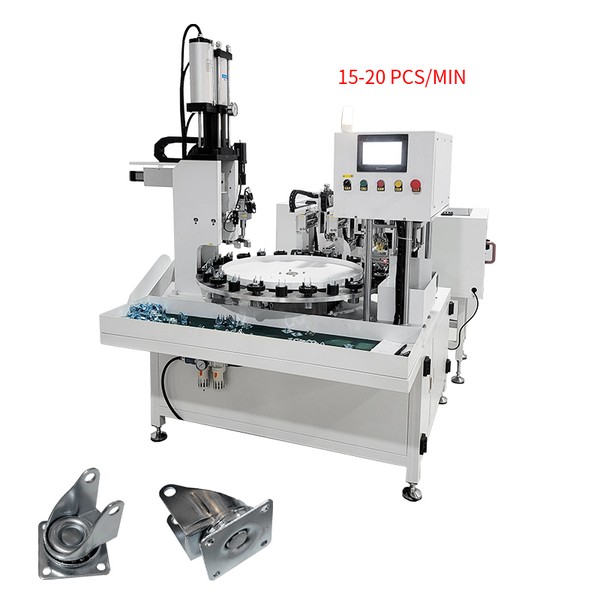
Caster Assembly Machine
Caster assembly presses a stem or a rivet into a caster body and, where required, fits a brake — a press operation sized by force and stroke rather than by wire. It sits in the auxiliary group because it shares the same machine platforms as the harness equipment: a frame, a press head and a feed system. Machines on this page cover fully automatic and semi-automatic versions, including a single-rivet brake assembly variant and a flat-cylinder model. The specification inputs are the caster part number, the stem or rivet type, the press force required and the target output per shift. Tooling follows the caster geometry, so a sample caster is run before shipment.
8 models
Dental Floss Making Machine
Some production lines in our catalogue sit outside the wire harness sector and are built on the same platforms: feeding, cutting, forming and boxing stations arranged around a different product. Dental floss production is one of them — the material is a filament rather than a conductor, and the operations are cutting to length, winding or sealing, and packing. It is included here because the integration work is identical: the line is configured from your product drawing and your shift target, and the stations are sized from those two numbers. If your requirement falls outside the harness range, send the drawing anyway; the answer may be a configured line rather than a catalogue machine.
3 models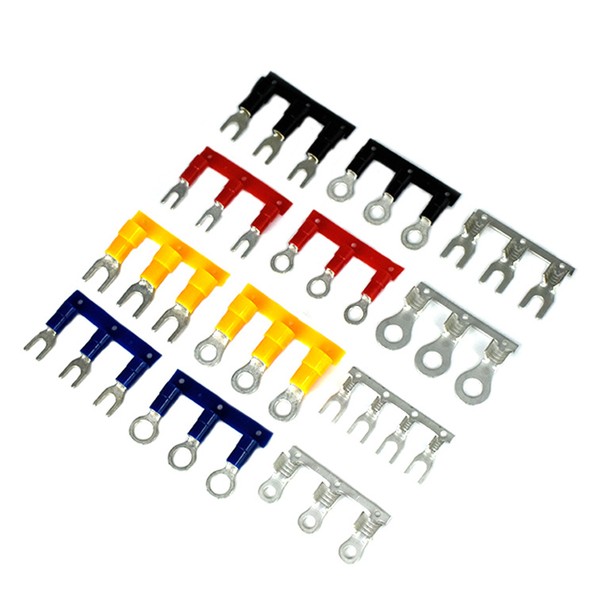
Parts for Terminal Crimping Machine and Wire Cutting and Stripping Machine
Tooling is what makes a crimp, so tooling is what decides how long a machine stays productive. This page covers the parts that wear and the parts that define the joint: applicators, dies and die sets, stripping and cutting blades, feed fingers, and the wear items that sit behind them. Dies are machined in-house on CNC vertical machining centres, which is what allows a die to be made to a customer drawing, including for terminal series we did not originally supply the machine for. Send the machine model and the terminal part number; for a die to drawing, send the drawing. Spare parts are held in our own stock.
13 models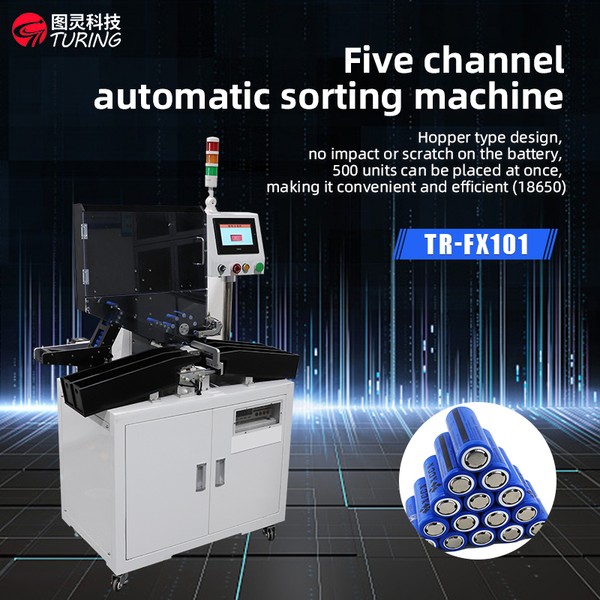
New Energy Battery Pack Assembly Line
A battery pack line is not a machine but a sequence of stations, and it is configured rather than chosen from a catalogue: cell sorting and grading, stacking or module assembly, busbar and tab welding, dispensing, and inspection. The sizing inputs come from the pack itself — cell format, module layout, pack throughput per shift — and from how many operators the plant can put on the line. Cells are graded before assembly because a pack is limited by its weakest cell, and pack output is confirmed against the target rather than quoted as a machine rating. We size the stations from your pack drawing and shift target, and the layout is agreed before the schedule is fixed.
8 models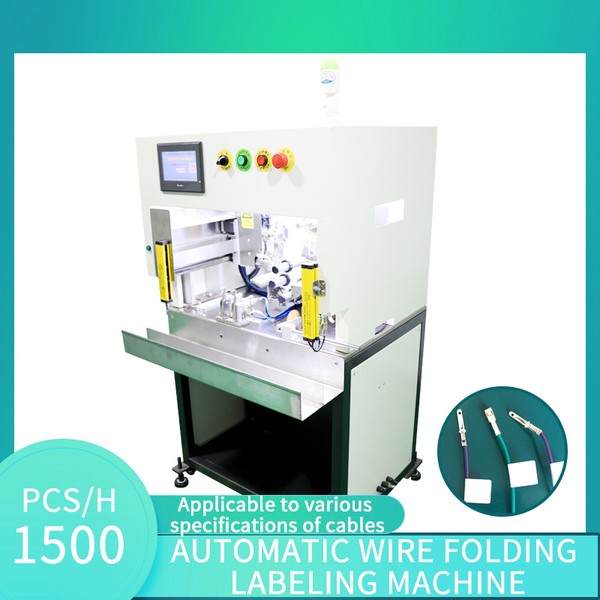
Labeling Machine
Labelling is the last operation before packing and the one most often left manual, which is why mislabelled or unlabelled harnesses turn up at incoming inspection. These machines apply labels or markers to a finished bundle, a coil or a component. The specification inputs are label size and material, the print content and its permanence requirement, and the surface the label is applied to — a curved bundle needs a different applicator from a flat tag. Print permanence is a sample question rather than a datasheet question, so we run your label and your print file. This page is being renamed from the current URL, which contains a spelling error; the product line itself is unchanged.
1 model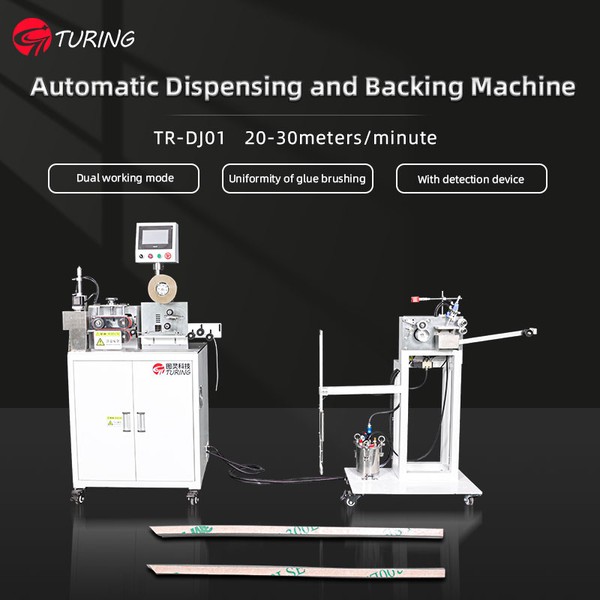
Dispensing and backing machine
Dispensing places a measured amount of adhesive, sealant or coating at a defined position; backing application lays a liner or carrier tape onto the same part. Both are volumetric operations, and both fail the same way when they drift — too little adhesive gives a joint that separates, too much gives squeeze-out that contaminates an adjacent surface. Machines on this page run dispensing and backing as a single pass over tape, flat components and formed parts. The specification inputs are the material being dispensed, the volume or bead geometry required, and the substrate. Material rheology decides the pump and nozzle, so we ask for the adhesive datasheet rather than a description.
1 model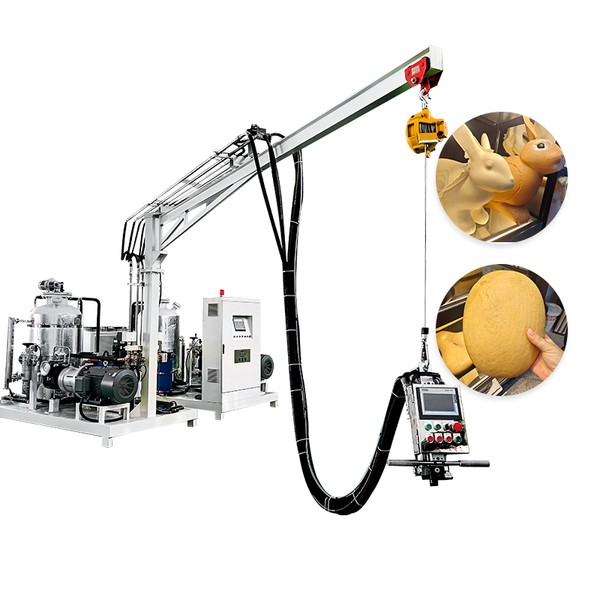
Foaming Machine
Foaming fills a cavity with a controlled-density foam so a component is held, insulated or sealed without adding a moulded part. It is a metering process: the two components have to be mixed in the right ratio and poured or injected within the reaction window, which is short and unforgiving. The range covers high-pressure and polyurethane foaming machines and the track-based circular rail lines that carry parts through the pour. The specification inputs are the foam density required, the cavity volume, and the cycle time your line can allow for cure. Because foam density decides both protection and cost, the ratio is verified on a first-article section before shipment.
25 models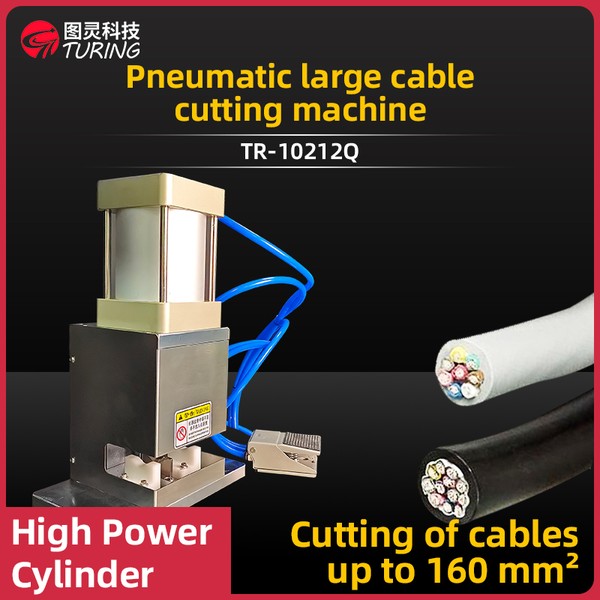
Cable Cutting Machine
A cable cutting machine performs one operation: it measures and cuts to length, leaving the insulation intact. Choose it when the ends are terminated elsewhere in the process, when the cut length runs into metres, or when the jacket is too heavy for a combined cut-and-strip head — pneumatic large-diameter cutting is what makes the last case workable. The deciding question is on your drawing: if a strip length is called out, a cut-and-strip machine removes one handling step; if only a length is called out, cutting alone gives a cleaner cut on thick jackets and costs less. Sample cuts on your cable are run before you order.
2 models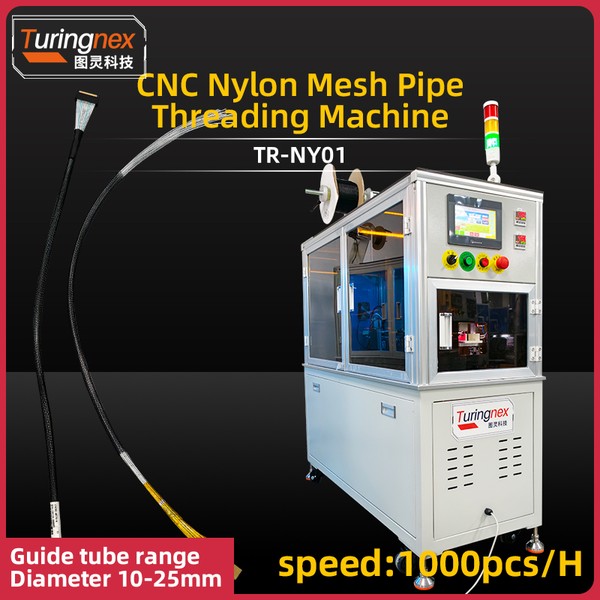
Wire threading braided mesh machine and plastic tube machine
Threading is what happens after the braid exists: wires are passed through a braided mesh sleeve, or a plastic tube is drawn over a finished bundle so the harness gains mechanical protection. Both are feeding problems rather than forming problems, and both fail in the same way when done by hand — the sleeve twists, the pitch varies, or the bundle stops short of the required length. The sizing inputs are mesh or tube inner diameter, bundle diameter and total threaded length, and the mesh pitch if the sleeve must be expanded to pass over connectors. This line is also specified with the wire threading and injection machines that follow it in the same assembly.
1 model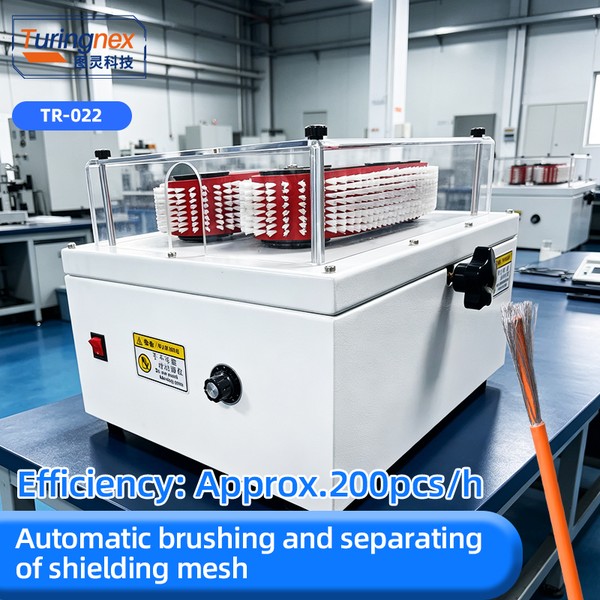
Wire Brushing Machine
Brushing removes what termination cannot tolerate: oxide, contamination, loose strands and plating debris on the conductor or the shield before a crimp or a weld is made. It is a preparation step, and skipping it produces joints that pass at first inspection and fail in the field — a welded splice made onto an oxidised surface starts with higher resistance than the same splice made onto clean copper. Machines on this page cover single-wire brushing and the crawler-type and separating machines used on shielding layers. The specification inputs are the wire or braid construction and the surface condition required, and brushing pressure is set so the conductor is cleaned without being reduced in section.
7 models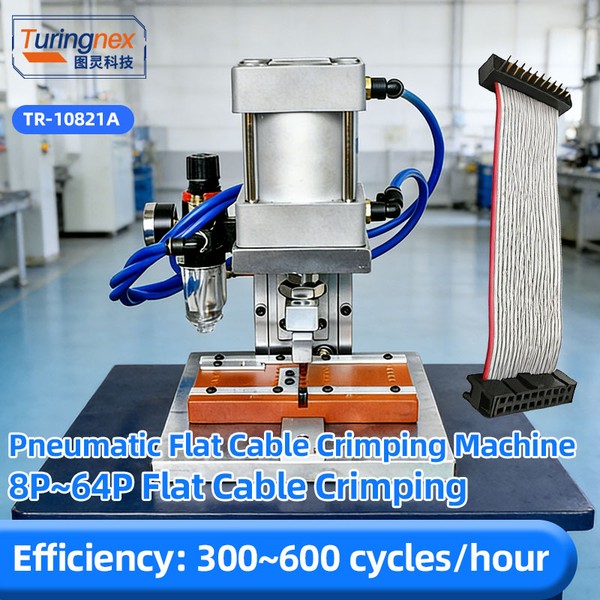
Automatic Iron Ring Crimping Machine
Ring terminals and iron rings are crimped by deforming a closed or nearly closed ring around a conductor or through a fastening point, which is a different tooling problem from an open-barrel terminal: the ring must close without cracking and without cutting into the strands. This family also covers the cast-iron mute-terminal presses used where a press running all shift has to meet a noise limit on the shop floor — a requirement that appears in the specification more often than machine datasheets acknowledge. The sizing pair is the ring or terminal material and size, and the wire gauge. Terminal samples are crimped and sectioned before the order is confirmed.
2 models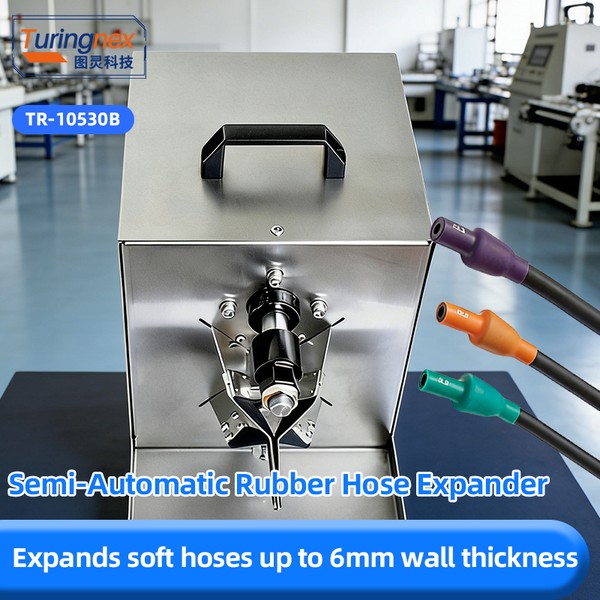
Hose Expander
Expanding a hose or sleeve so it can be drawn over a joint is a preparation step that decides whether the following operations are possible at all: if the sleeve cannot be opened to the required diameter without being damaged, no amount of care downstream will produce a sealed joint. The sizing inputs are the hose inner diameter, its wall thickness and material, and the diameter it must reach — a hose stretched beyond its elastic limit does not recover, and the joint leaks. Expansion is done with controlled air or mechanical fingers depending on the material. This is a small line and is usually specified together with the sealing or bundling machine that follows it.
1 model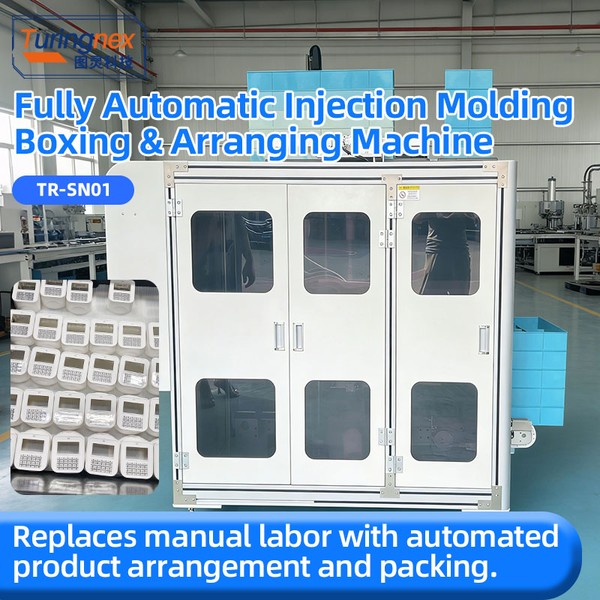
Injection Molding Boxing & Arranging Machine
This line combines moulding with the handling that follows it: parts are moulded, then boxed and arranged into a set pattern rather than dropped into a bin. The arranging stage is the reason these lines exist rather than a moulding machine alone — an oriented part can go straight into the next assembly step, while a bin of loose parts has to be re-oriented by hand. What we need first is the part geometry, the mould (customer-supplied or made to drawing), the cavity count and the required output per shift. Because the line is configured rather than selected, station layout is settled before any delivery schedule is issued. A first-article run is made before shipment.
1 modelModel details coming
This category's full spec list is being prepared — send an inquiry and we will confirm availability.
Why Choose Turingnex for Others
Others is a real purchasing decision. Here is what you get when you order from the factory directly — verified capabilities, stated plainly.
Factory-Direct, No Middleman
Buy straight from the Dongguan factory at manufacturer pricing — no trading-company markup.
CE-Certified & ISO9001 Workshop
CE-certified machines built in an ISO9001 workshop, with Alibaba Trade Assurance available on request.
100% Run-In Before Shipment
Every machine passes a full run-in test and a shipment video is recorded before it leaves the workshop.
12-Month Warranty & Spare Parts
Guarantee coverage on every build, genuine spare parts shipped worldwide, remote support included.
Free Test on Your Material
Send your wire and terminals — we run a crimp/strip test and share the video before you decide.
Custom Dies to Your Drawing
Dies and tooling made to your terminal drawing, so the machine runs your parts from day one.
Built and Tested in Our Workshop
Every machine is assembled in our Dongguan workshop and run in before shipment. QC sequence: Raw material check → Machining → Assembly → 100% run-in test → Shipment video. A test video on your own material is available on request.
What Buyers Say
Customer references
We publish verified quotes only — with company, country and named contact. Ask us for reference customers in your market and we will connect you directly.