
Crimp quality does not fail suddenly — it drifts: a die wears a few microns, a spring weakens, a sensor shifts, and the crimp height moves slowly out of spec. Machines that look fine are already producing borderline parts. A maintenance routine built around crimp-height checks catches drift while it is cheap. This guide lays out daily, weekly and monthly checks that apply across our machines — from the TR-JD22 semi-automatic mute press to fully automatic machines like the TR-HY03.

Daily checks (10 minutes at line start)
1. Crimp-height verification. Crimp three test terminals and measure crimp height against the die setup card before production starts. This single check catches most drift. 2. Die cleanliness. Wipe the die and applicator area; copper dust and terminal plating residue build up and change effective die closure. 3. Air pressure (pneumatic machines): confirm the regulated pressure matches the machine spec; low air = weak crimps, high air = die slam. 4. Safety guard and foot/trigger function. Check the two-hand or guard interlocks actually stop the press.
Weekly checks
1. Die and applicator inspection. Look at the indenter edges and the anvil under good light: rounding or chips mean replacement. Dies are consumables — schedule them like blades. 2. Shut-height stability. On fully automatic machines, confirm the shut height / bottom stop has not crept; a drift of a few hundredths changes crimp height more than it looks. 3. Feed path. Terminal reel feeding, strip feed rollers and sensors: clean and check for wear on rollers that score the wire insulation. 4. Lubrication. Apply the machine manual's grease points; a dry slide slows the cycle and adds variation. 5. Noise check. A new rattle usually means a worn bushing or loose guard — find it before it becomes a breakdown.
Monthly checks
1. Pull-test correlation. Take five crimps across the shift and pull-test them; confirm the average and minimum pull still meet the terminal spec. This is the ultimate check that daily crimp-height values are correct. 2. Force-monitor calibration (on servo machines): verify the in-stroke force readings against a reference part, so the logged data stays meaningful for customers. 3. Electrical and pneumatic review. Check cables, connectors, air lines and fittings for chafing or leaks. 4. Spare review. Confirm spare dies, blades and applicator parts are stocked for the terminals you run most.
The maintenance table
| Frequency | What | Tool / method |
|---|---|---|
| Daily | Crimp height | Micrometer vs setup card |
| Daily | Die cleanliness, air pressure, guards | Visual / gauge |
| Weekly | Die edges, shut height, feed, lube, noise | Visual / feel |
| Monthly | Pull test, force calibration, spares | Pull tester / reference part |
Why the machine class changes the routine
- Semi-automatic presses (TR-JD22): the operator is the process control. Daily crimp-height checks and die discipline carry the quality; keep the mute-drive mechanism lubricated per the manual.
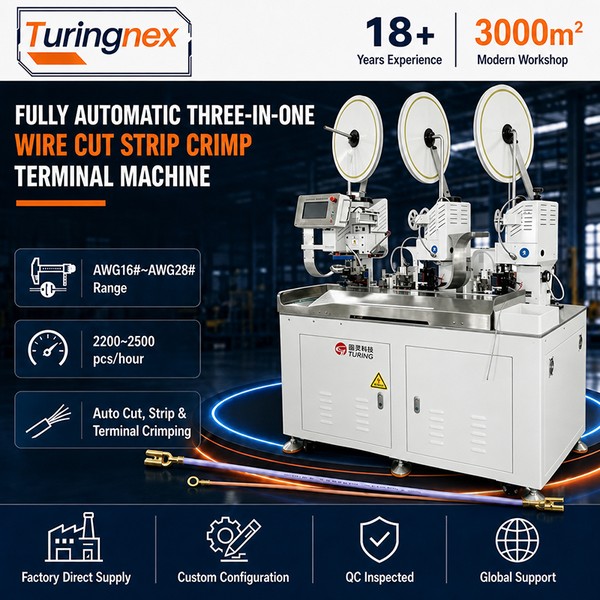
- Fully automatic machines (TR-HY03): add the feed path and sensor checks — a drifting strip-length sensor quietly produces a whole batch of wrong leads.
- Servo machines: monthly force-calibration protects the value of the logged data. See our servo crimping guide for the data side.
FAQ
How do I know when a die is worn? Crimp height rises or pull test falls while the press settings are unchanged; visually, the indenter edges lose their sharp corners. Track die life per terminal count and replace before failure.
Can maintenance be done by the operator? Daily and weekly checks should be operator-led — they take minutes and prevent drift. Monthly checks (pull tests, calibration) belong to a technician or the QC team.
Does preventive maintenance void the warranty? No — the opposite. Routine checks per the manual are required to keep the machine within spec; our machines ship with the maintenance schedule, and we support customers with spare dies and parts. For choosing the right press in the first place, see terminal crimping machines by family.
Bottom line
Crimp quality is maintained, not inspected into the part. Ten minutes of daily checks, a weekly die and feed review, and a monthly pull-test correlation keep crimp height stable and pull tests passing. If your crimp height is drifting or your pull test is borderline, send us your die setup and a few failed parts — we will tell you which check is being missed.